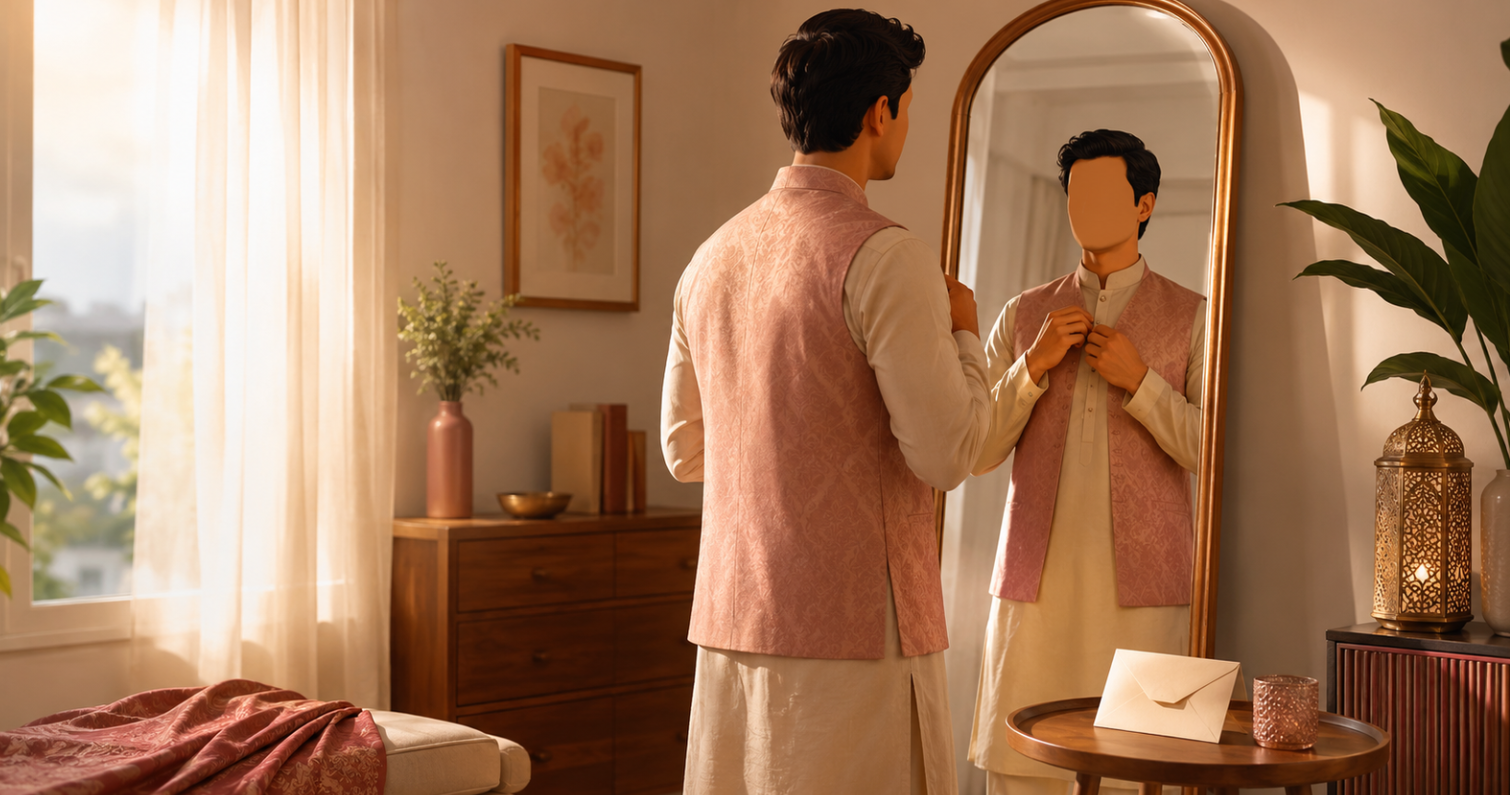
You have registered for a matrimonial meet. Now you are wondering what you have actually signed up for.
Most people picture something awkward: a room full of strangers, parents watching closely, and no idea what to say first.
The reality is far more ordinary than that. This guide walks through exactly how a matrimonial meet runs, so you arrive knowing what to expect.
Why Meeting in Person Changes the Search
Profiles tell you facts: height, education, profession, community, and family background. All useful, and all quite limited.
What a profile cannot show is how someone speaks, how they treat people around them, or whether a conversation with them feels easy.
Those things decide compatibility far more than a list of details does. Twenty minutes of conversation often tells you more than twenty profiles.
That is the entire logic behind a matrimonial meet. It moves the search forward to the stage where you actually learn something.
Who Attends a Matrimonial Meet
The room is usually more varied than people expect. Attendees come from a wide range of ages, professions, and family situations.
Most events are organised around a shared basis, such as community, faith, language, or region. That gives everyone a starting point in common.
Some events focus on a particular group. You will find meets for professionals, for those seeking a second marriage, and for families based abroad.
Many attendees come alone. Others come with a parent, a sibling, or a close relative, which is completely normal, and nobody finds it unusual.
How a Typical Event Is Structured
Good events are structured rather than left to chance. Nobody is asked to walk into a room and simply mingle.
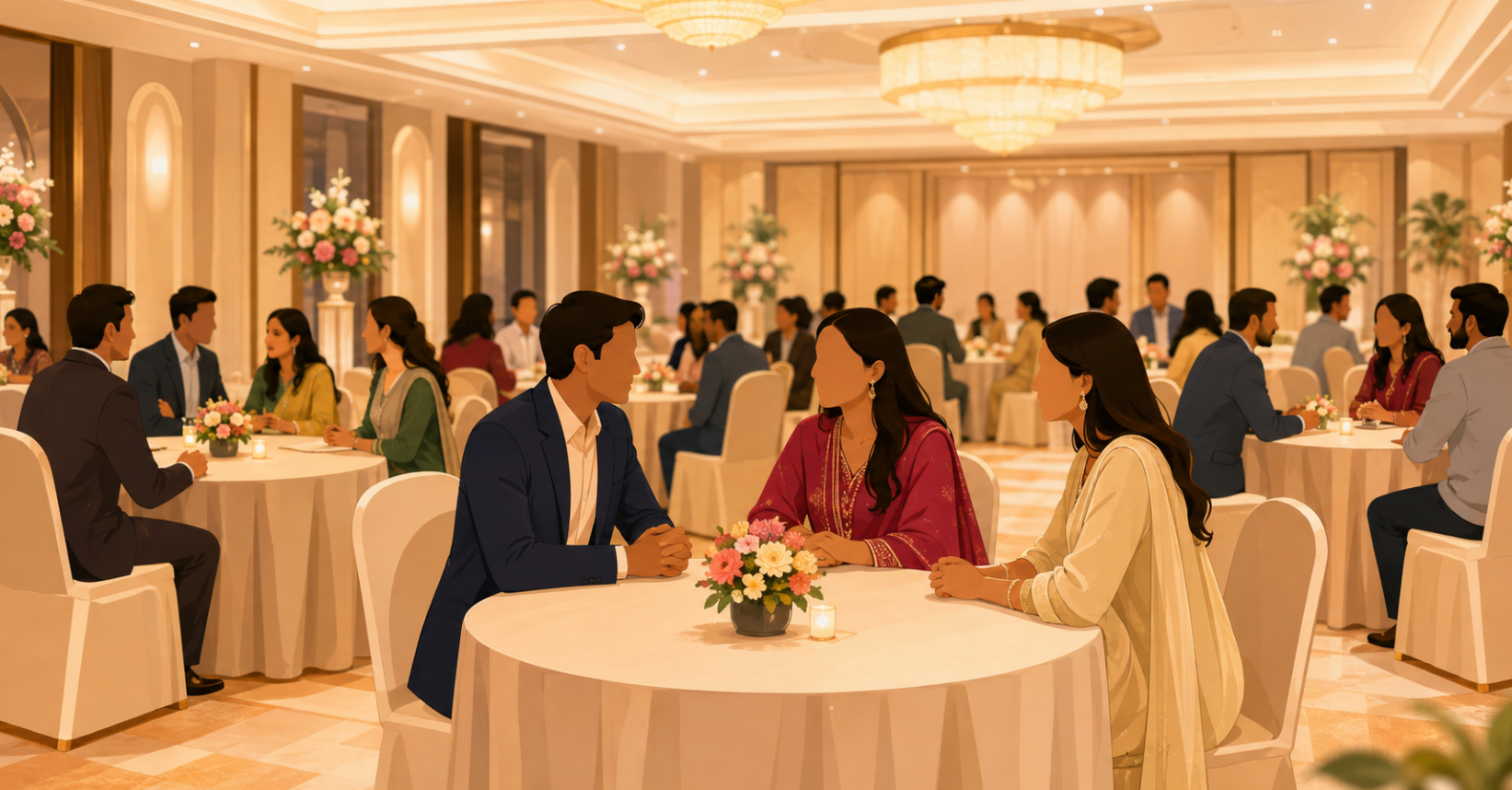
Most meets follow a familiar shape. There is a check-in period, an introduction round, a series of shorter conversations, and open time at the end.
The structure exists to remove the hardest part, which is starting a conversation with a stranger. When the format tells you where to go and who to speak to, that pressure disappears.
Events usually run for two to four hours. Longer than that becomes tiring, and the quality of conversation drops.
Registration and Check-In
You arrive, confirm your booking, and receive whatever the organiser uses to identify guests. That may be a badge, a number, or a simple card.
Many organisers verify identity at this stage. Bringing a photo ID is sensible, and it is a good sign when an event asks for one.
There is normally a settling-in period with refreshments. Use it. Standing quietly with a cup of tea for ten minutes is a perfectly good way to start.
Arrive on time rather than early or late. Arriving late means missing the introduction round, which is the part that makes everything afterwards easier.
The Introduction Round
Most events open with brief introductions. Each attendee says a few words about themselves to the room or to a smaller group.
This usually covers your name, what you do, and perhaps one line about what you enjoy. It rarely lasts more than a minute per person.
Nobody expects a polished speech. A short, natural introduction lands far better than something clearly rehearsed.
The round has a practical purpose beyond politeness. It gives everyone a set of names and faces, so later conversations start with something to refer back to.
One-to-One Conversations
This is the main part of the event. Depending on the format, you may rotate through timed conversations or simply be introduced to people the organiser thinks are a reasonable fit.
Timed rounds usually run between five and ten minutes each. That is deliberately short because the aim is not to decide anything.
The aim is only to work out whether you would like to talk again. That is a much easier question than whether someone is right for you.
You will not connect with most people you meet, and that is completely normal. One or two promising conversations makes an event worthwhile.
The Role of Families at the Event
Family involvement varies enormously between events, and both approaches are valid.
Some meets are designed for individuals, with families joining only at a later stage. Others actively welcome parents and treat family conversations as part of the day.
Check the format before you book. Attending with your mother at an individuals-only event, or arriving alone at a family meet, both create awkwardness that is easy to avoid.
Where families do attend, they usually have their own conversations in parallel. This works well because both generations get to form their own impressions.
What Organisers Do Behind the Scenes
A well-run event involves considerable work you never see.
Organisers typically handle:
- Verifying that attendees are genuine and eligible to attend.
- Balancing the guest list so the event is not heavily one-sided.
- Grouping attendees sensibly by age range or stated preferences.
- Managing the schedule so conversations start and end cleanly.
- Handling introductions for anyone who is struggling to join in.
The verification work matters most. It is the difference between a curated room and a random one.
What Happens After the Event
Most events include a way to express interest afterwards rather than exchanging numbers on the spot.
You typically indicate who you would like to speak to again. Where that interest is mutual, the organiser passes on contact details.
This protects everyone. Nobody has to decline face-to-face, and nobody receives messages they did not want.
Do this promptly, ideally within a day or two. Details blur quickly once you have met a dozen people in one afternoon.
Common Worries, Addressed
A few concerns come up again and again before someone's first event.
People worry it will feel like an interview. In practice, the good events feel closer to a wedding reception where you happen not to know anybody yet.
People worry about being judged on appearance alone. That happens less than expected, largely because everybody present is in the same position.
People worry about running into someone they know. It occasionally happens, and it is far less awkward than imagined because you both had the same reason for coming.
The most common feeling afterwards is relief. The event is almost always less intimidating than the anticipation of it.
How Many Events Should You Attend?
One event is rarely enough to judge the format. Most people find their first is mainly about getting used to the experience.
By the second or third, conversations flow far more easily. You know the structure, you have a natural introduction, and the nerves have largely gone.
Attending different types of events also helps. A smaller regional meet and a larger city event attract quite different groups.
There is no need to rush this. Attending one event every few weeks is more sustainable than several in one month.
Treat each one as practice as much as opportunity. That mindset takes considerable pressure off the day.
What a Good Organiser Adds
The difference between a good and a poor event is almost entirely down to the organiser.
A good organiser verifies attendees properly, so the room contains people who are genuinely seeking marriage. That single step removes most problems before they start.
They also balance the guest list. An event heavily weighted toward one group serves nobody well, however many people attend.
They notice when someone is standing alone and make an introduction. Small interventions like this change an individual's whole experience of the day.
When choosing between events, weigh the organiser at least as heavily as the venue or the guest count.
What the Day Feels Like
Descriptions of format tell you the mechanics. They do not tell you the atmosphere, which is what most people are actually asking about.
The first twenty minutes are usually the quietest. People arrive, collect refreshments, and speak mainly to whoever they came with.
After the introductions, the room warms noticeably. Hearing everyone speak briefly makes strangers feel considerably less like strangers.
By the middle of the event, the noise level is closer to a family function than a formal gathering. That surprises most first-time attendees.
Toward the end, people tend to return to one or two conversations they enjoyed. This is often where the most useful exchanges happen.
Leaving usually feels lighter than arriving. Whatever the outcome, the unknown part is behind you.
Where Events Fit in the Wider Search
A matrimonial meet is one route among several, and it works best alongside the others rather than instead of them.
Family introductions, community networks, and online profiles all still have their place. Events simply add something those cannot, which is meeting several suitable people face-to-face in one afternoon.
They are particularly useful when a search has stalled. Months of profiles with no progress often shift quickly after one event.
They also suit people who present better in person than on paper, which is a great many people.
Online Matrimonial Events
Not every meet happens in a hall. Online events follow a similar structure using video rooms instead of tables.
These suit people living abroad, those in different cities, and anyone who would rather begin with a video conversation.
The format is usually tighter, with shorter rounds and an automatic move between conversations. That removes any awkwardness about ending a chat.
Test your camera, microphone, and connection well before the start. Technical trouble is the main thing that spoils an otherwise good online event.
How Mehfil by Qamar Events Work
Our events are organised around clear categories, so you attend something suited to what you are actually looking for.
You can browse upcoming matrimonial events by community, city, and type, including options for professionals, second marriage, and families based abroad.
Each listing shows the venue, timing, and format before you commit, so there are no surprises on the day.
Registration is free to start. You can create an account and browse before deciding on anything.
Bottom Line
A matrimonial meet is a structured afternoon of short conversations with people who share your basic circumstances and intentions.
There is a check-in, an introduction round, a series of brief conversations, and a way to express interest afterwards. That is genuinely all there is to it.
You do not need to be charming or well prepared. You only need to turn up and be willing to talk.
If you would like help getting ready, read our guide on how to prepare for your first matchmaking event.
Frequently Asked Questions
How long does a matrimonial meet last?
Most events run between two and four hours. Online events are often shorter, at around ninety minutes.
Can I attend alone?
Yes, and many people do. Attending alone is completely normal, and nobody will find it unusual.
How many people will I speak to?
This varies by event size and format. A structured meet often involves eight to fifteen short conversations.
What if I do not connect with anyone?
That happens, and it is not a wasted afternoon. Most people find each event makes the next one considerably easier.
Do I exchange contact details at the event?
Usually not directly. Most organisers pass on details only where interest is mutual, which protects everyone involved.
Are parents allowed to attend?
It depends on the event. Some are designed for individuals, and others welcome families, so check the listing before booking.